Hebberd Drug Store Medicine Bottle

Ivy King

Copyright La Crosse County Historical Society

Copyright La Crosse County Historical Society

Catalog Number: 1990.078.01

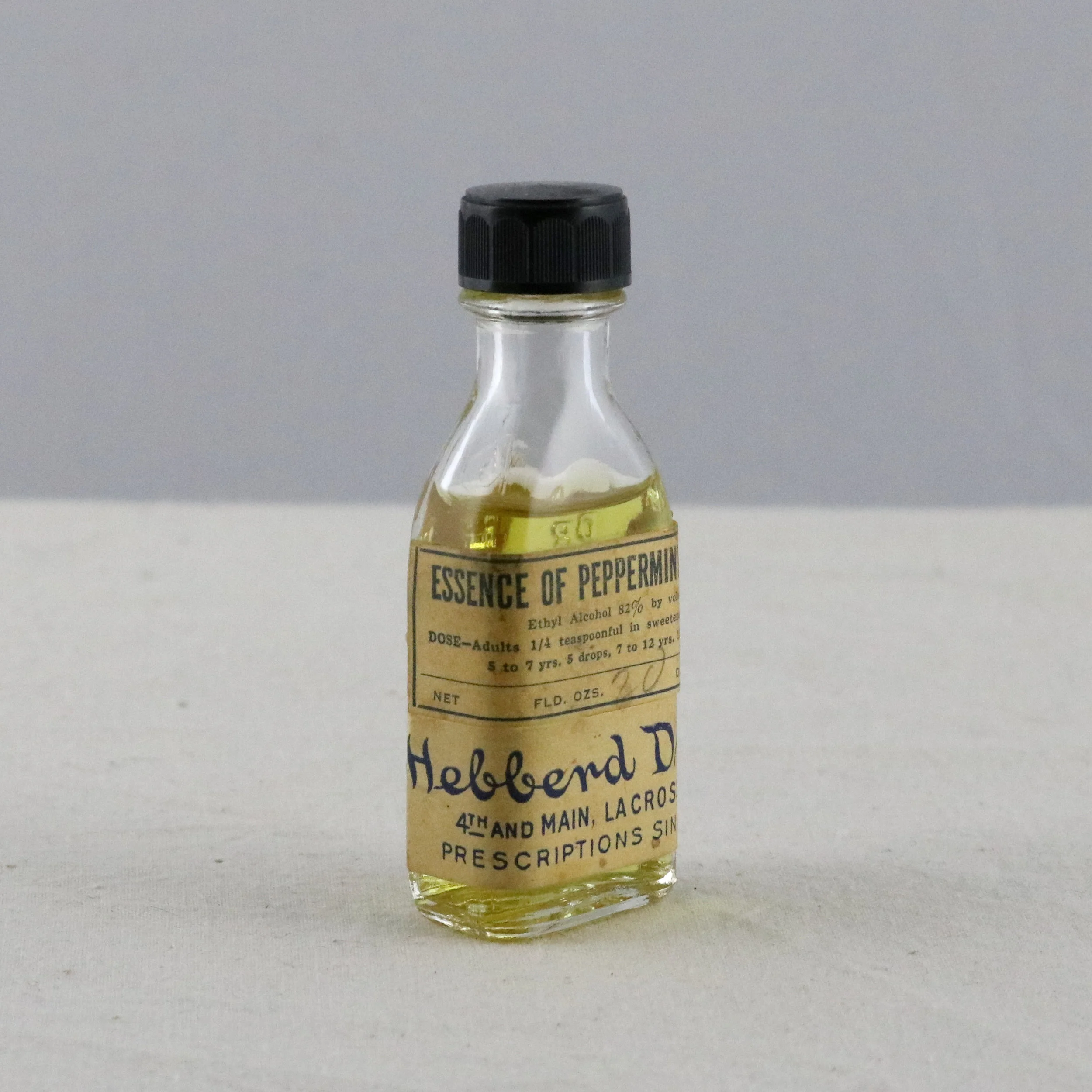
This small glass medicine bottle with a screw on cap reads, “Essence of Peppermint Hebberd Drugs 4th and Main, La Crosse Wis, Prescriptions since 1852.”

The exact date of the bottle of the essence of peppermint is unknown, but peppermint has been used as a medicinal remedy for centuries. Today, peppermint is mainly used to flavor baked goods and candy. But, peppermint has also been used to allay nausea, relieve stomach pains, and even to cover the taste of other medicines. It was also used to relieve headaches, toothaches, and arthritis.

Essence of peppermint differs slightly from peppermint extract or oil. Peppermint extract is created by distilling dried leaves and flower parts of the plant in water whereas, essence of peppermint was prepared by mixing peppermint oil with alcohol. Essence of peppermint holds all of the medicinal properties of other forms of peppermint, but it was marketed to heal colic, stomach pains, low spirits, and loss of appetite for both adults and infants. Essence of peppermint was sold across the United States for its medicinal properties, so it is not surprising the local drug store carried it as well.

Hebberd Drug Store began in 1852 when La Crosse was still a relatively small town of a few hundred people. The business was owned by George Hoare (later changing his name to Howard) and S.D. Hastings. The drug store’s first location was near where the Charmant Hotel is today. However, the business moved multiple times over the years.

Howard was the predecessor of the Hebberd business. He was born in Gloucestershire, England in 1832, and he emigrated to the United States at 18 with his family due to an economic depression in England. He opened the La Crosse business after settling in the area. After Howard’s death, the business was sold to the Hebberd family in 1894.

In the years under the Hebberd Family, specifically Edward Smith Hebberd, the Drug Store changed considerably. A soda fountain was added, and they began making ice cream. Eventually, in the 1920s a lunch counter was added to the store.

Edward’s son, Arthur became a partner of the Hebberd Drug Store after graduating from the University of Minnesota School of Pharmacy. During WWII Arthur’s interest turned to the production of cosmetics. During the summer of 1957 Hebberd closed the historic La Crosse business to focus his time on the Dumont Company, which produced hand creams such as “No Crack,” and other cosmetic products.

At the time of closure, Hebberd Drug Store was the oldest business in La Crosse still in operation. The Dumont Company still exists and still makes “No Crack” hand cream, which has a devoted following.

The bottle was donated to La Crosse County Historical Society in 1990 by Arthur’s wife, Mary Hebberd.

This article was originally published in the La Crosse Tribune on April 6, 2019.

This object can be viewed in our online collections database by clicking here.

Listman Mill’s Marvel Flour Bag

Copyright La Crosse County Historical Society

Copyright La Crosse County Historical Society

Robert Mullen

Catalog Number: 2011.009.01

While most Americans today purchase their bread at the grocery store, that wasn’t the case at the turn of the twentieth century. A person could purchase a loaf of bread at the local bakery, but a less expensive alternative for most households was baking bread in their own kitchen. The homemaker of 1900, whether living in a rural area or in town, had various duties and expectations, and among them was the baking of bread for the family.

This week’s artifact is a paper bag from about 1912, that once held twenty-four and one half pounds of flour made at the Listman mill in La Crosse. The brand name “Marvel Flour” was Listman’s trademarked brand. It was marketed and sold nationally, with agents in several eastern cities. Locally, a bag of flour like this one could be purchased by a family at one of many small grocery stores in the city.

Marvel flour used advertising to great effect. Its advertisements called the flour “the great bread maker.” Made of Minnesota hard spring wheat, the Listman Mill ads claimed that their flour was “wonderfully light and white” and could make more loaves per barrel of flour than any other brand. In addition, every retail bag contained coupons inside. Some local agents even set up contests offering prizes for the best loaf of bread made with Marvel flour.

The Listman mill was located on the riverfront between King and Jay Streets. Begun in 1879 by William Listman and his partners, the new mill could produce up to 550 barrels of wheat flour each day. After it burned in 1889, the mill was rebuilt and then produced 1500 barrels a day, and in a few years increased that production again. After 1893, the mill continued under different management until 1918, when the non-local owners shut it down during a strike. The building continued to be used for wheat storage and shipment until it burned in 1935. It stood for another 40 years until it was razed in 1995.

This article was originally published in the La Crosse Tribune on March 30, 2019.

This object can be viewed in our online collections database by clicking here.

Dr. John Callahan's Medical Bag

Kyle Willoughby

Catalog Number: 1990.081.01

Copyright La Crosse County Historical Society

Copyright La Crosse County Historical Society

For this week’s “Things That Matter,” we are traveling back in history with a doctor’s bag that belonged to Dr. John Callahan, a local physician who began his medical practice in La Crosse in 1891 and retired 52 years later.

Dr. John Callahan was born in Appleton in 1859 and received his medical degree from Rush Medical College in Chicago.

Copyright La Crosse County Historical Society

Copyright La Crosse County Historical Society

After graduating, Dr. Callahan came to La Crosse to begin his medical practice. A few years later he set up office within his residence at 933 Rose St. This house was listed on the National Register of Historic Places in 1995.

From his home office, Dr. Callahan held appointments and made home visits for about eight years before he sold the home to Dr. George and Eva Lueck for $5,000.

In the years leading up to his retirement in 1943, Dr. Callahan and Dr. Lueck were both physicians and likely partners holding offices at 422 Main St. and at the Rose Street address. It was during this time, that Dr. Callahan served as the city physician for La Crosse for several years.

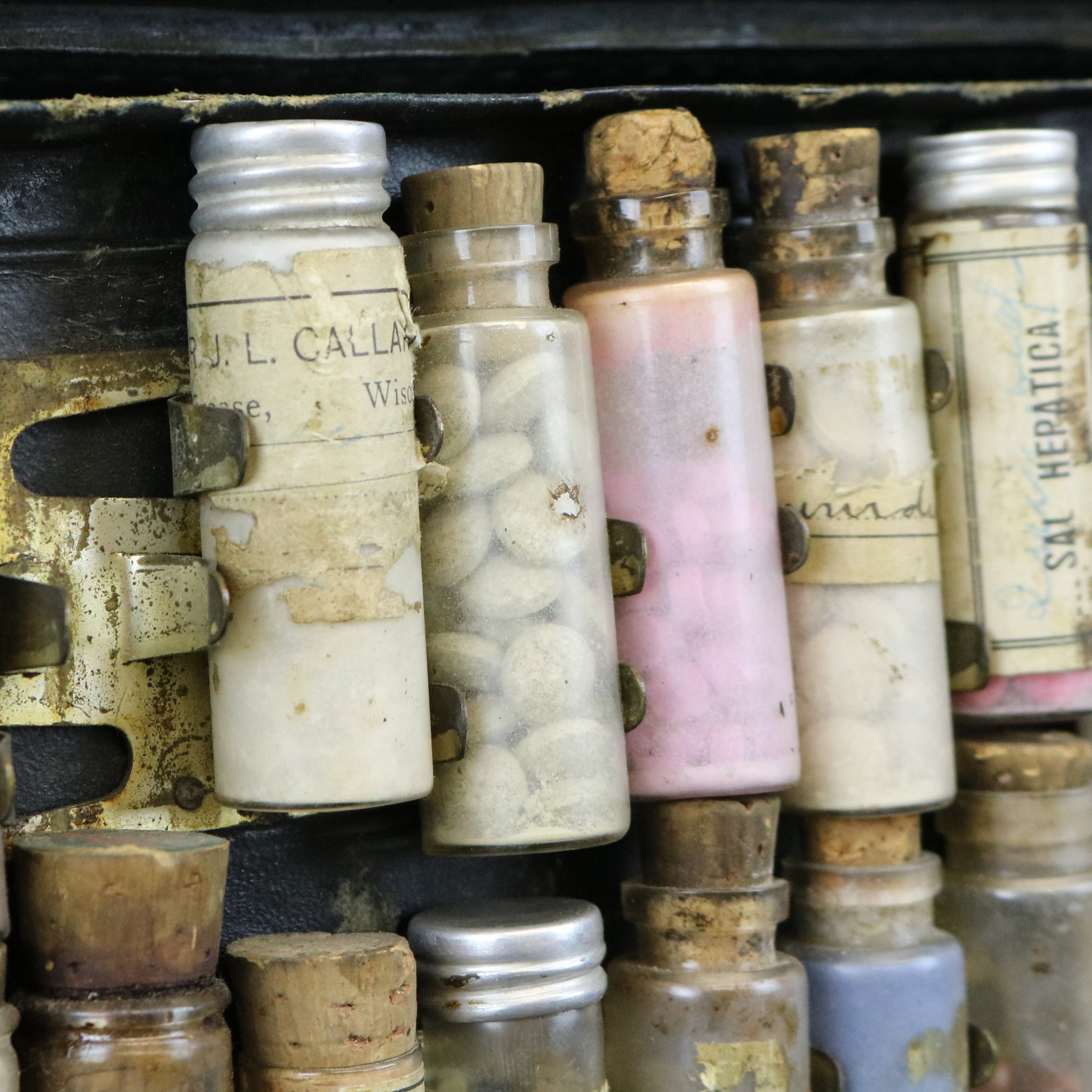
Dr. Callahan’s medical bag is a hard-shell case lined with black leather. It would have accompanied him on his house visits. Included in the case are a series of sterilized bandages, doctors’ gloves and medical supplies. However, most of the case is occupied by more than two dozen glass vials for liquid and tablet medicines.

Some of the medicine bottles still have the paper label with Dr. Callahan’s name and the original contents.

These handwritten labels are difficult to read, but you can make out some. There are “Sal Hepatica,” and “Phenolax,” both early commercial laxatives, and one vial is simply labeled “tonsillitis.” We can only wonder what those pills contained.

Callahan, like many other physicians during his time, made house calls when a patient was too sick or injured to travel. Carrying this bag to patients’ homes would have assisted him in providing a quick cure for the sick, or a brief remedy for more ailments in which more serious practice was required.

This method was considered less expensive as patients did not require expensive health insurance or funds to travel to a physician in another town or city. People, including the doctors, also felt that personal attention in the home was less stressful and more effective.

This article was originally published in the La Crosse Tribune on March 23, 2019.

This object can be viewed in our online collections database by clicking here.