Josephine Bangsberg’s doll

Amy Vach

Catalog Number: 1981.021.01

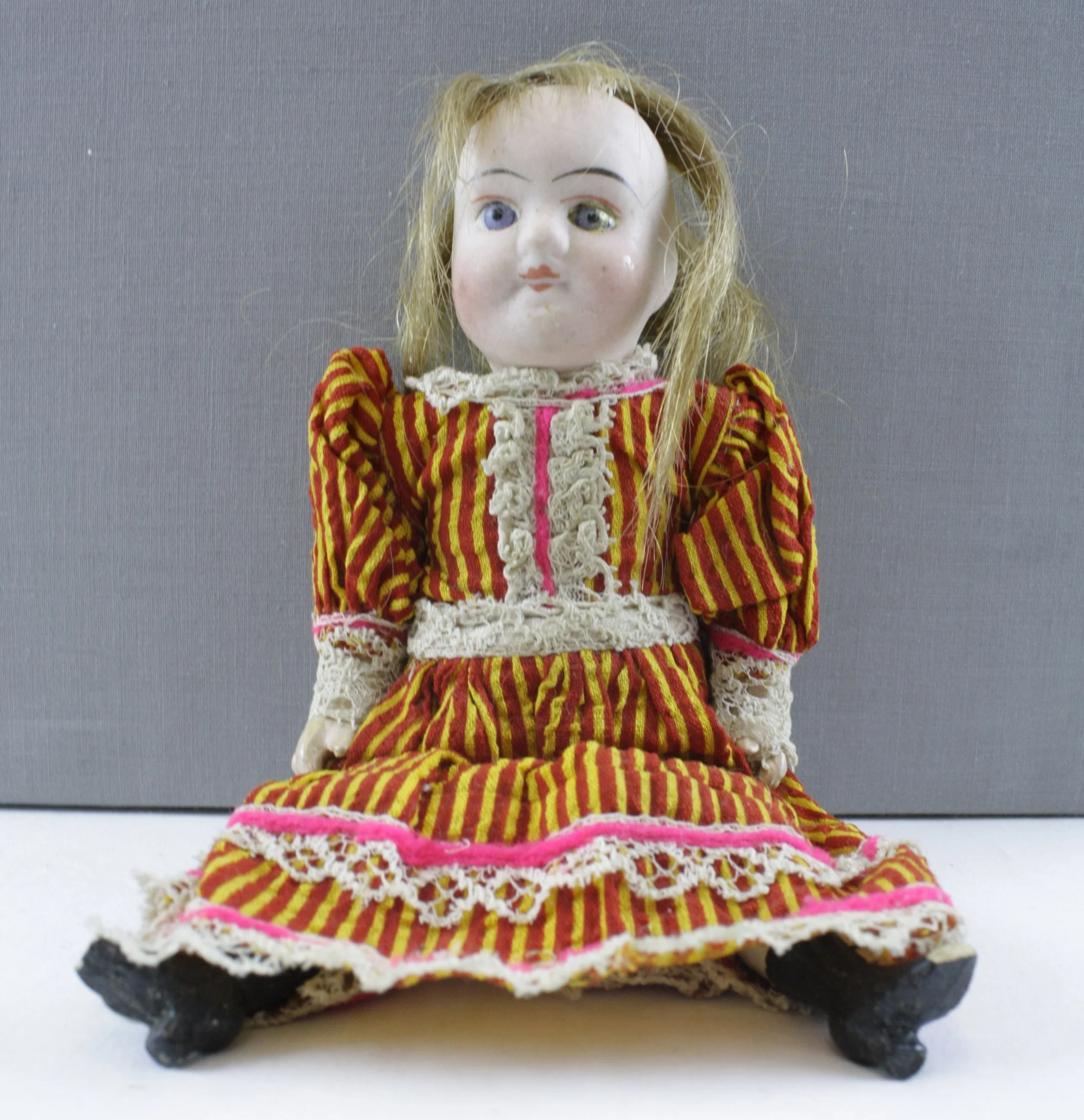
Branson De Hart was stationed in Manila during the Spanish-American War. While in the in the Philippines, he picked up this small bisque and papier-mache doll as a souvenir. He gave the doll to his 10-year-old niece, Josephine (Mahoney) Bangsberg when he returned to the United States in 1898.

This gift from her uncle created a lifelong love for Josephine. In her free time, she cared for her dolls and helped mend the dolls of friends, then those of her grandchildren. Later in life, Josephine opened a doll hospital called Jo’s Dolls to extend her services to even more young children.
Copyright La Crosse County Historical Society

Copyright La Crosse County Historical Society

Josephine came across many dolls in her life, but the one from her uncle was always her most cherished. The doll is still wearing the original clothes it wore when Branson found the doll on the streets of Manila. Josephine only undressed the doll once so she could mend the doll’s body.

When the doll was donated to the La Crosse County Historical Society in 1981, it came with a letter describing the doll’s experiences through her own eyes:

“My name is Calamity Jane. It is not my real name. That I do not remember because you see I am very old. I belonged to a little girl who lived in Manila at the turn of the century (1900), and I was always carefully cared for and wrapped in a fine fichu whenever I went to walk.

“We were forced to flee from our home when Dewey landed in Manila in August 1898. In the hurry, my mistress dropped me in the street and I lay unnoticed for a long long time until a fine young Army soldier, Branson De Hart, walking by chanced to see me. He picked me up and slipped me in the bottom of his knapsack, where I rode safely for seven long months.

“When the soldier went to America far across the Pacific, I went with him. He went to a big ranch on the Boulder River, where I was given to a little girl, his niece. She named me Calamity Jane. Many famous people including a man who was later to be the president looked at me and two or three offered much money for me, but my mistress loved me for the sake of her uncle and later for myself.

“I went away to school with her and slept in a little box in the back of a dresser drawer, and then we went to college together. My mistress never undressed me. She let me wear my little lace-trimmed cotton dress that I wore when I left Manila.

“We have always been together: When my mistress married, I was placed in the bottom of her cedar chest. My mistress was very busy and I didn’t get me out very often, but once in a while she took me out and I met her children, but they never played with me nor loved me as my mistress loved me.

“Now my mistress is getting old, her hair is white, but I have never changed. I look as I looked on the day that gay young soldier snatched me from the gutter in far off Manila. I have a place of honor on the mantle of my mistress’ home. You all, I have seen history in the making.”

Artifacts do not always come with detailed histories — sometimes they are simply appreciated and valued for the history they represent. This doll tells an additional story, and is not simply a toy from the 1890s. She is a souvenir from war that was treasured for a lifetime and created a love for dolls that led Josephine to want to care for others’ dolls.

This article was originally published in the La Crosse Tribune on May 13, 2017.

This object can be viewed in our online collections database by clicking here.
William and Joan Fancher’s dollhouse

Amy Vach

Catalog Number: 2004.061.01

Copyright La Crosse County Historical Society

Copyright La Crosse County Historical Society

I still remember fondly the year that my dad made me a dollhouse for my birthday. It was a kit, but I still was able to personalize colors, flooring and wallpaper. It was a simple two-story Cape Cod-style house with four rooms, and it was perfect. I enjoyed decorating the interior of my dollhouse more than I think I ever played with it.

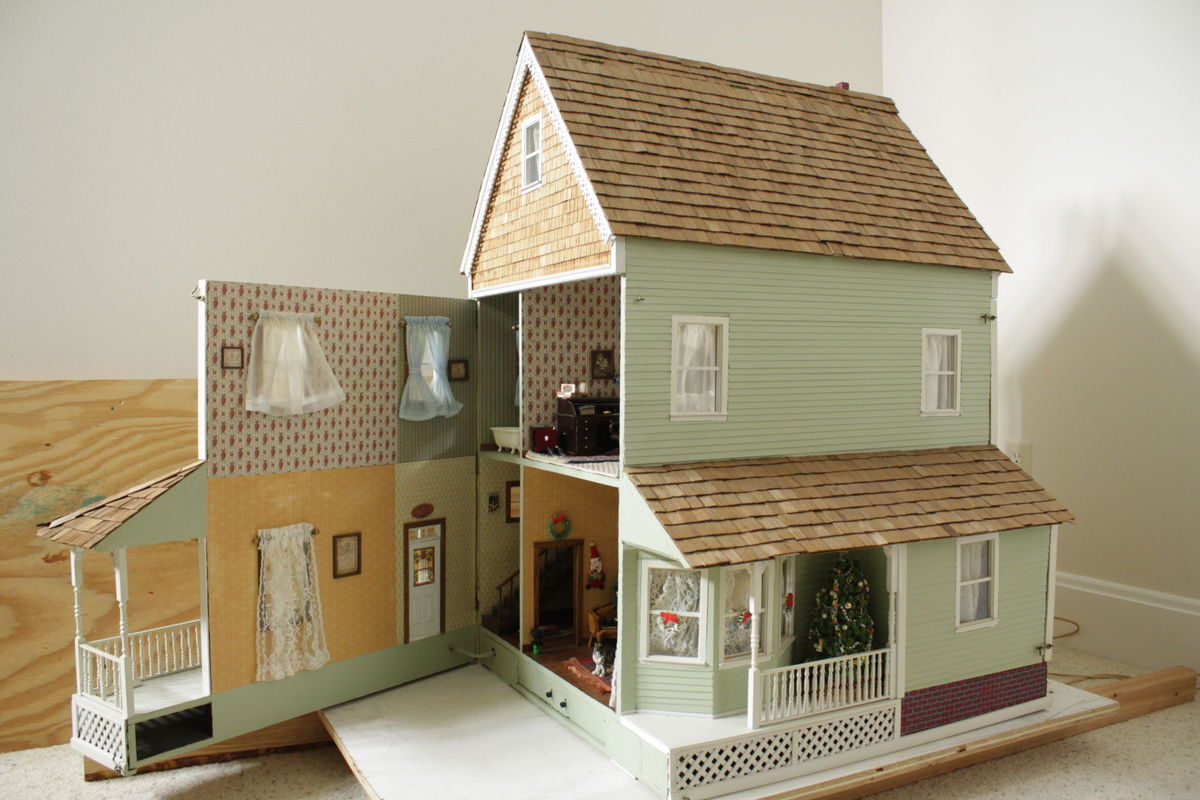
The same can be said for this dollhouse made by William and Joan Fancher.

The La Crosse County Historical Society has a few dollhouses in its collections, but this one is by far the most extravagant. William followed a plan, but he made everything on his own. He spent 1,440 hours (about two months time) making the dollhouse. There are 2,250 handmade shingles and individual floorboards. Joan did all of the needlework in the house, including wall hangings and rugs.

Joan designed her dollhouse as a tribute to her favorite parts of her own house, as well as those of family members. She chose the Pepperwood Farms plan because it was similar to the home her grandparents had lived in.

The kitchen has bright blue furniture that matches the furniture Joan had in her kitchen. The attic playroom is similar to that of her mother’s cousin’s house, where she loved playing as a child. The dollhouse has a Christmastime theme because that was Joan’s favorite time of the year. A Santa Claus and reindeer decorate the roof, and there are Christmas trees, presents, wreaths, and a Nativity scene throughout the house.

Not only did the couple make the dollhouse, they also kept a scrapbook that detailed each room and where each item was from. Some of the items were given to the Fanchers as gifts from friends’ vacations — a black cat came from Hong Kong, and a small ivory dog was a souvenir from the Holy Land.

The scrapbook contains progress as well as final photos, showing where each item was supposed to be in every room. When the historical society moved, the dollhouse was packed up, room by room, just like a regular house so it’s not presently set-up how the Fanchers had it.

The final pages of their scrapbook serve as a guestbook, recording the names of all the people who came to visit the dollhouse and admire William and Joan’s handiwork. The dollhouse has more than 200 signatures in its guest book.

William Fancher donated the dollhouse to the historical society in 2004, the same year his wife, Joan, died.

What makes dollhouses like this one and the one made by my father special is that they are filled with personalized touches. Each is unique and tells its own story. The Fanchers’ dollhouse tells the story of a husband and wife who worked together, with the help of their friends, to create their “ideal home.” It was a family project that gave them a shared goal and shared pleasure.

This article was originally published in the La Crosse Tribune on May 6, 2017.

This object can be viewed in our online collections database by clicking here.

Alice Ginn’s doll

Peggy Derrick

Catalog Number: 1967.004.25

Copyright La Crosse County Historical Society

Copyright La Crosse County Historical Society

Alice Frazee Ginn was born in La Crosse in 1914. Her father, Oren Frazee, was the head of the biology department of La Crosse State College, now known as the University of Wisconsin-La Crosse.

An only child of doting parents, Alice saved many family heirlooms, which she donated to the La Crosse County Historical Society. Her childhood dolls were part of the donation, accompanied by a handwritten list with their names and descriptions. She had baby dolls — “pretty lady” dolls — and this homemade mammy doll she called Aunt Jemima.

Aunt Jemima’s body is made of black knit wool, possibly from socks, which is stuffed and dressed in a cotton print dress, apron and head kerchief. She has gold-hoop earrings and a bead necklace. Eyes are sewn-on buttons, while nose and mouth are embroidered with red yarn. More than likely this doll was made from a purchased pattern or one printed in a women’s magazine.

Alice and her parents were white, not African American, and her mammy doll is a common and typical artifact of the Jim Crow era, roughly 1877 to 1960. That’s when Black Americans were intentionally disenfranchised by laws and customs, while at the same time culturally defined and demeaned by a series of stereotypes commonly seen in advertising, publications and entertainment.

A remarkable number of household products were sold with promotional images of black servants touting them, and a few still remain on store shelves today — Uncle Ben’s rice and Aunt Jemima pancake mix are two of the best known — and Aunt Jemima is a classic example of the mammy stereotype that was seen as the nurturing, nonthreatening and devoted family servant. The character played by Hattie McDaniel in the 1939 film “Gone with the Wind” is another example.

Figures such as Alice’s doll are recognizable as mammys by their rotund bodies, head scarves and earrings, as well as their skin color. Today items like this are prized by collectors.

Mammys were popular themes for cookie jars, broom dolls, clothespin bags and all sorts of small household items. The unavoidable association with devoted servitude was apparently reassuring to mainstream white culture.

Alice’s Aunt Jemima doll was included in her donation to the historical society in 1967. It shows some signs of wear, but its condition is remarkably good.

I have no idea how Alice, who died in 1989, felt about African Americans or the Civil Rights Movement, but it makes me sad to think how this doll was actually part of a broader cultural pattern of racism.

Evidence of attitudes toward different ethnic or cultural groups are important to preserve in an historical artifact collection so that we can examine and learn from the past and not just view it through the rosy lens of nostalgia. When the evidence is as charming as this little doll, the truth can be hard to acknowledge.

Alice’s dolls are being added to our online database and will soon be available for viewing at lchshistory.pastperfectonline.com. Aunt Jemima is already online, and you can find her here.

This article was originally published in the La Crosse Tribune on April 29, 2017.

This object can be viewed in our online collections database by clicking here.